
A DEXA Scan (Dual-Energy X-ray Absorptiometry) is an advanced imaging test used primarily to measure bone mineral density (BMD) and assess bone strength. It is widely considered an important diagnostic tool for detecting osteoporosis and osteopenia, conditions that can weaken bones and increase the risk of fractures.
At Saibaba Diagnostics & Labs, our DEXA Scan services use advanced imaging technology to provide accurate measurements of bone mineral density. The results can help doctors assess bone health, identify individuals who may be at increased risk of fractures, and monitor changes in bone density over time.
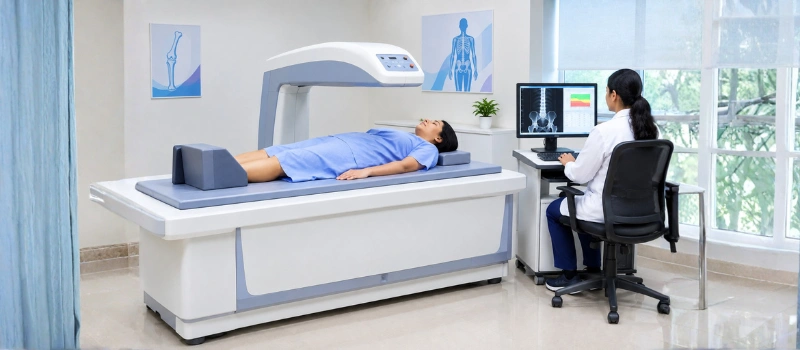
DEXA, also known as DXA, stands for Dual-Energy X-ray Absorptiometry. It is a specialized X-ray examination that uses two different low-dose X-ray beams to measure the amount of mineral present in bones.
The scan commonly evaluates areas such as the:
1.Hip
2.Lower spine
3.Forearm, when clinically required
The difference in how the two X-ray beams are absorbed by bone and soft tissue allows the system to calculate bone mineral density.
Unlike a conventional X-ray, which primarily produces an image of the body’s internal structures, a DEXA scan provides quantitative information about bone density.
Bone loss can occur gradually and may not produce noticeable symptoms during its early stages. A person may have reduced bone density without experiencing pain or other obvious warning signs.
A DEXA scan can help identify reduced bone density before a fracture occurs. Early identification allows healthcare professionals to assess fracture risk and recommend appropriate lifestyle changes, monitoring, or treatment when necessary.
DEXA scanning may be used to:
1. Measure bone mineral density
2. Detect osteoporosis
3. Identify osteopenia
4. Assess fracture risk
5. Monitor bone health over time
6. Evaluate the response to osteoporosis treatment
7. Provide a baseline measurement for future comparison
Osteoporosis is a condition in which bones become weaker and more fragile, increasing the likelihood of fractures. It is sometimes referred to as a “silent” condition because significant bone loss can occur without noticeable symptoms.
A DEXA scan can help determine whether bone density is within the expected range or whether there is evidence of low bone density.
Based on the scan results and other clinical factors, a doctor can assess the patient’s bone health and determine whether further evaluation or treatment is required.
DEXA scanning commonly focuses on areas that are particularly useful for assessing fracture risk.
Hip
The hip is an important measurement site because low bone density in this region can be associated with an increased risk of hip fracture.
Lumbar Spine
The lower portion of the spine is another important area used to evaluate bone mineral density.
Forearm
In certain situations, the forearm may also be examined, depending on the patient’s medical history and the recommendation of the healthcare professional.
The areas examined may vary depending on the reason for the scan.
At Saibaba Diagnostics & Labs, we aim to provide reliable diagnostic imaging services using modern technology and quality-focused procedures.
Our DEXA Scan service is designed to provide accurate bone mineral density measurements that can assist healthcare professionals in evaluating bone health.

We provide a wide range of diagnostic services ranging from complete health check-up packages for citizens & corporates to super-specialty tests
We provide a wide range of diagnostic services including Master health checks and preventive screening for individuals and corporates
Copyright © 2026. All rights reserved. Saibaba Diagnostics & Labs
Terms and Conditions
Privacy Policy
